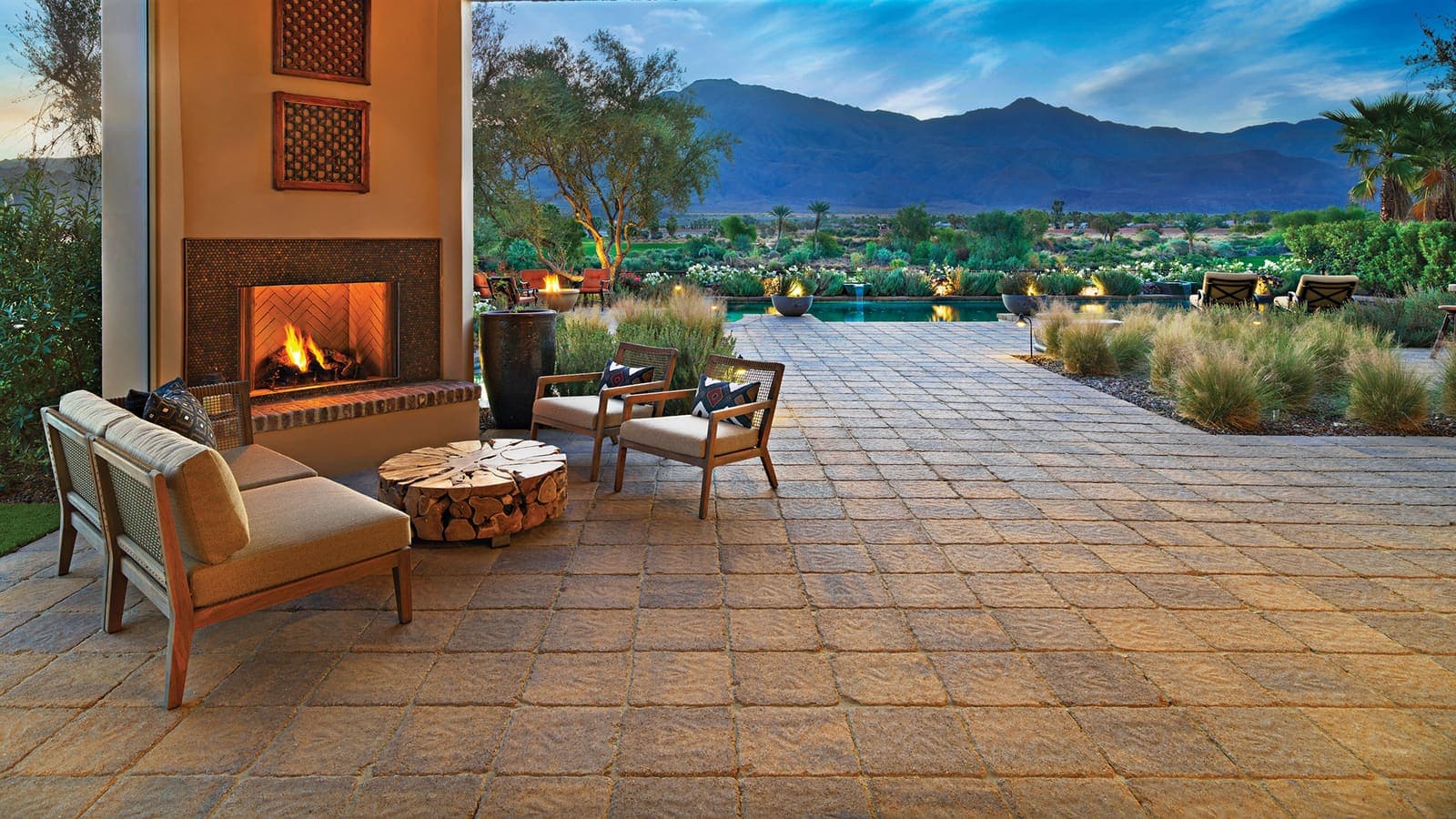
It's the first question almost every homeowner asks: should I go with pavers or just pour concrete? Both have their place — here's an honest comparison so you can decide what's right for your driveway, patio or pool deck.
Durability & cracking
Poured concrete is a single rigid slab. As the ground shifts with SoCal's seasons and the occasional tremor, it cracks — and once it cracks, the only fix is a patch or a full replacement.
Pavers are individual units set on a flexible base. They move with the ground instead of fighting it, so they don't crack. If one ever gets stained or damaged, you lift it and drop in a new one.
Looks & options
Concrete is gray (or stamped concrete, which mimics pavers but still cracks). Pavers come in hundreds of colors, shapes, textures and patterns — from classic cobbles to sleek large-format slabs — so you can match your home exactly.
Cost
Plain concrete is cheaper up front ($6–12/sq ft installed). Pavers run more ($12–30+/sq ft installed) but last far longer, need fewer repairs, and add more resale value — so the lifetime cost is often comparable or better.
- Concrete: lower up-front cost, cracks over time, hard to repair
- Pavers: higher up-front cost, no cracking, repairable, more resale value
The verdict
For most homeowners who plan to stay and want the best look and longevity, pavers win. If you need the absolute lowest up-front cost and don't mind future cracking, concrete is an option. Want to see the difference on your own home? Upload a photo for a free visualization.
Frequently asked
For most homeowners, yes — pavers don't crack, are repairable, last decades and add more resale value, which offsets the higher up-front cost over time.
Stamped concrete mimics the look but is still a rigid slab that cracks, and repairs are nearly impossible to hide. Pavers keep the look without the cracking.
See it on your own home — free
Upload a photo for a free visualization, or book a free on-site measurement with AR preview.